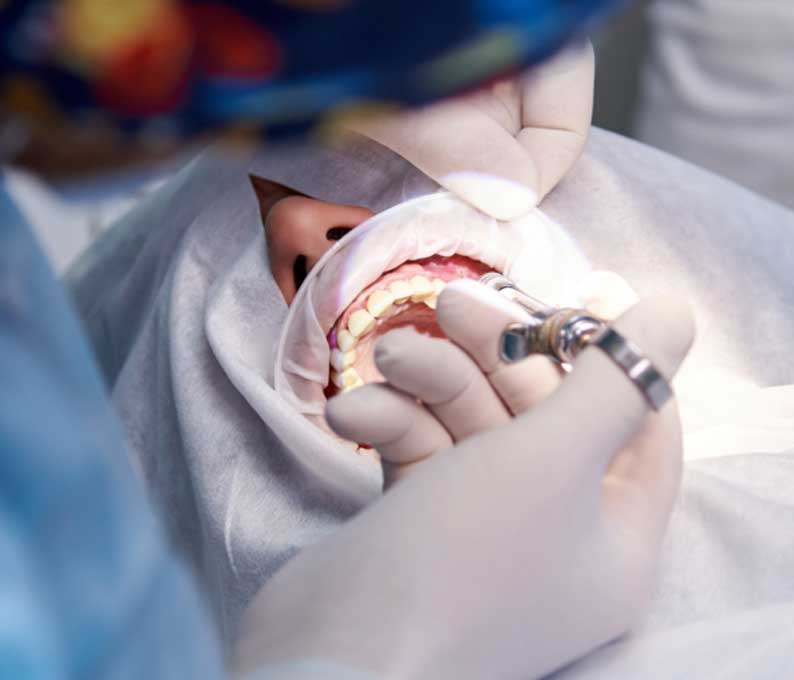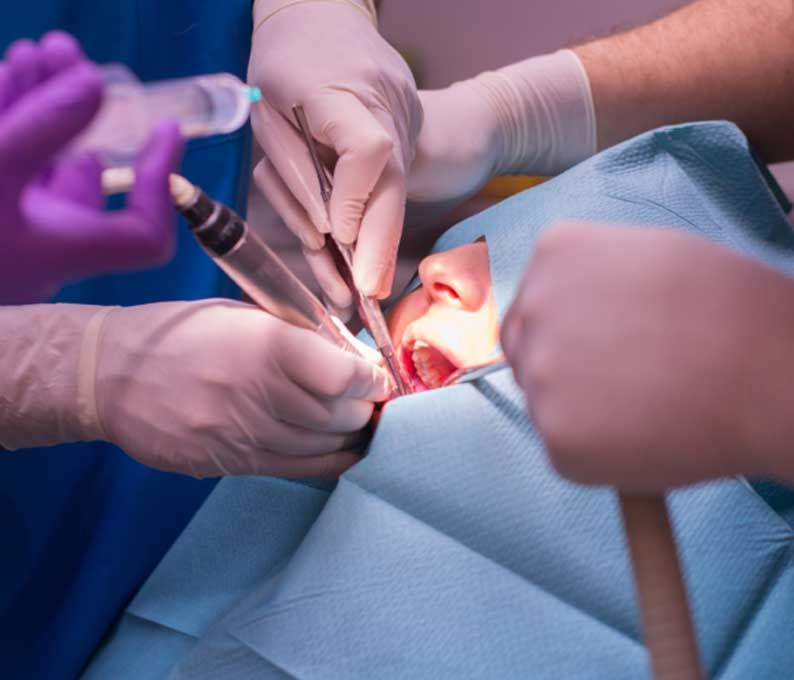
Wisdom teeth, also called third molars, are the last permanent teeth to develop. They usually appear during the late teenage years or early adulthood, approximately 17-25 years old. Some wisdom teeth erupt normally and remain healthy, while others become trapped under the gums or jawbone, grow at an angle, or create areas that are difficult to clean.
A problematic wisdom tooth may cause recurrent pain, swelling, gum infection, food trapping, tooth decay or damage to the neighboring second molar. However, not every wisdom tooth automatically needs to be removed. A clinical examination and appropriate dental X-ray are needed to determine whether removal or regular monitoring is the better option.
At Precision Smile Dental Clinic in Sampaloc, Manila, we assess erupted and impacted wisdom teeth and explain the recommended procedure, expected recovery, possible risks and estimated treatment cost before proceeding.
Quick answer: Wisdom tooth removal may be recommended when the tooth causes pain, infection, decay, gum disease, cystic changes or damage to an adjacent tooth. Fully erupted teeth may sometimes be removed through a simple extraction, while impacted teeth may require surgical removal or odontectomy.
A wisdom tooth is considered impacted when it cannot erupt normally because there is insufficient space, an obstruction or an unfavorable tooth position.
The tooth may be:
An impacted tooth does not always cause immediate symptoms. However, its position may make the area difficult to clean or place the neighboring tooth and surrounding tissues at risk.
No. A wisdom tooth that is fully erupted, functional, healthy, easy to clean and free from disease may be retained.
Disease-free wisdom teeth that are not removed should still be checked during regular dental visits. Monitoring may include clinical examinations and periodic X-rays because the condition of the tooth and surrounding tissues can change over time.
Removal is more likely to be recommended when there is:
The decision should consider the patient’s symptoms, medical history, age, tooth position, risks of removal and risks of leaving the tooth in place.
Pericoronitis is inflammation or infection of the gum tissue around a partially erupted wisdom tooth. Food debris and bacteria may collect underneath the gum flap covering part of the tooth.
Possible symptoms include:
Treatment depends on the severity and cause. Cleaning, irrigation and short-term symptom management may help during an acute episode, but recurrent infection may indicate that the tooth should be removed.
Partially erupted or poorly positioned wisdom teeth can be difficult to brush and floss. Decay may develop in the wisdom tooth itself or on the back surface of the second molar beside it.
Plaque and food may accumulate between a wisdom tooth and the adjacent molar. This can contribute to gum inflammation, periodontal pocketing and bone loss in the area.
A tilted or impacted wisdom tooth may contact the second molar. Depending on its position, this may be associated with decay, gum problems, root damage or loss of supporting bone around the adjacent tooth.
A fluid-filled sac can occasionally develop around an impacted wisdom tooth. Although uncommon, this may damage nearby teeth or jawbone and may require surgical treatment.
Schedule a dental examination when you experience:
Headaches and generalized jaw discomfort can have several possible causes. An examination is necessary before assuming that a wisdom tooth is responsible.
Wisdom teeth may be described according to their direction and the amount of tissue covering them.
These classifications help the dentist estimate the complexity of removal, but the complete treatment plan also depends on root shape, mouth opening, bone density and proximity to important anatomical structures.
A visual examination alone cannot show the entire wisdom tooth or its relationship with structures underneath the gums.
A panoramic X-ray may help the dentist evaluate:
In selected cases, additional imaging may be recommended when more detailed information could affect treatment planning. International dental associations emphasizes that imaging is important for evaluating tooth anatomy, surrounding disease and relationships with the inferior alveolar nerve, second molar and maxillary sinus.
A simple extraction may be possible when the wisdom tooth has fully erupted and enough of the crown is accessible.
After the area is numb, the dentist loosens the tooth and removes it using appropriate instruments. The socket is cleaned and gauze is placed to help control bleeding.
An impacted wisdom tooth may require surgical extraction, commonly called odontectomy in the Philippines.
The procedure may involve:
Not every impacted tooth requires all these steps. The technique is selected according to the position and anatomy of the tooth.
Local anesthesia is used to numb the treatment area. During removal, patients may feel pressure, pushing, vibration or movement, but they should not feel sharp pain.
Temporary soreness, swelling and jaw stiffness are common after the anesthesia wears off. The amount of discomfort depends partly on the number of teeth removed and the difficulty of the procedure.
The dentist should be informed immediately when sharp pain is felt during treatment so that additional anesthesia can be administered when appropriate.
Other comfort or sedation options may be discussed when clinically indicated and available. Patients receiving sedation need specific preparation, supervision and transportation arrangements.
The dentist will ask about:
Do not stop prescribed medication without instructions from the prescribing physician or treating dentist.
The gums, wisdom tooth, adjacent molar and surrounding tissues are examined. A panoramic or other appropriate X-ray may be taken or reviewed.
The dentist will explain:
After confirming adequate anesthesia, the dentist removes the tooth using the planned technique.
Before leaving the clinic, the patient receives instructions on bleeding control, diet, oral hygiene, medication and warning signs.
The price varies considerably because “wisdom tooth removal” can refer to anything from an uncomplicated erupted-tooth extraction to a complex complete-bony odontectomy.
Publicly posted private-clinic estimates in the Philippines commonly range from several thousand pesos to approximately ₱15,000 or more per tooth, depending on the city and difficulty of the case. These online ranges are only general market estimates and are not quotations from Precision Smile Dental Clinic.
Factors affecting the final fee include:
At Precision Smile Dental Clinic, the appropriate procedure and estimated fee should be provided after the examination and X-ray review. This prevents patients from receiving an inaccurate quotation based only on a photograph or description sent online.
Recovery differs between patients. A simple extraction may heal more comfortably than a deep surgical removal.
A blood clot forms inside the socket and protects the healing tissues. Mild bleeding or blood-stained saliva may occur.
Patients should rest, use gauze as instructed and avoid actions that could disturb the clot.
Swelling and jaw stiffness may be more noticeable during this period. Postoperative swelling often reaches its greatest level around the second or third day before gradually improving.
Pain and swelling should generally begin improving. Patients can gradually return to more normal food as chewing becomes comfortable.
The gum continues closing over the socket. Any non-dissolving stitches may need removal during the scheduled follow-up. Dissolving stitches may loosen or disappear on their own.
Deeper bone healing continues for several weeks or months even after the patient feels normal.
Always follow the personalized instructions given by your dentist because recommendations may differ depending on the procedure.
Bite firmly but gently on the gauze for the period instructed. Replace it only when necessary.
A small amount of blood mixed with saliva can appear more significant than it actually is. However, heavy bleeding that continues despite firm pressure should be reported to the clinic.
During the initial healing period:
The blood clot supports healing. If it fails to form or becomes dislodged, a painful condition called dry socket may develop.
Start with soft, cool or lukewarm food, such as:
Avoid sharp, hard, crunchy or seed-containing food that could traumatize or lodge inside the socket.
Chew on the opposite side when possible.
Continue brushing the other teeth carefully. Avoid directly brushing or disturbing the surgical site during the earliest stage of healing.
After 24 hours—or according to your dentist’s instructions—begin gentle warm salt-water rinsing. Do not swish aggressively.
Take prescribed medication exactly as directed. Do not exceed the recommended dose and do not combine medicines without checking whether their ingredients overlap.
Antibiotics are not automatically required after every extraction. When antibiotics are prescribed, use them according to the dentist’s instructions and report any suspected allergic reaction immediately.
A cold compress may be used intermittently during the early postoperative period when recommended. Do not place ice directly against the skin.
Most wisdom tooth removals heal without serious problems, but no surgical procedure is completely risk-free.
Possible complications include:
Lower wisdom teeth may be positioned close to nerves that provide sensation to the lower lip, chin and tongue. Your dentist should discuss any case-specific nerve risk seen on the X-ray before treatment. Recognized complications include dry socket, infection and nerve-related numbness or tingling.
Contact the clinic when you have:
Severe swelling that affects breathing or swallowing requires urgent medical attention. NHS guidance also recommends urgent assessment for uncontrolled bleeding, severe worsening pain or swelling, or pain accompanied by bad taste, fever or systemic illness.
Some patients can perform light duties the following day after a simple extraction. Surgical removal may require several days of reduced activity, especially when the work is physically demanding or several teeth were removed.
Plan important work, travel and events around the expected recovery period discussed by your dentist.
In selected patients, several wisdom teeth may be removed during one appointment. The decision depends on the difficulty of each tooth, medical condition, anesthesia plan, expected recovery and the clinician’s judgment.
The absence of pain does not always mean the absence of disease. Conversely, an asymptomatic and disease-free wisdom tooth does not automatically require surgery.
The dentist should consider the X-ray findings, function, cleaning access, current disease and future risk before recommending removal or surveillance.
Avoid scheduling wisdom tooth removal immediately before travel.
Flying: Wait at least 3 days after surgical wisdom tooth removal, although 5–7 days is preferable. Most especially until bleeding is controlled and swelling is improving. Longer delays may be needed after surgical removal, sedation, infection, or upper wisdom-tooth surgery near the sinus.
Scuba diving: Avoid diving until the socket has healed and you are free from pain, swelling, and medication side effects—usually at least 4–6 weeks after an uncomplicated extraction. Ask your dentist for clearance before diving.
Wisdom teeth are sometimes blamed for crowding, but dental alignment can change for several reasons. Orthodontic concerns should be evaluated using the patient’s complete bite, jaw and tooth-position records.
Yes, when clinically indicated. Extraction may be performed before or during orthodontic treatment. The orthodontist and treating dentist should coordinate the timing.
Not every patient needs antibiotics. The decision depends on the presence and extent of infection, medical history, immune status and the procedure performed.
Bring:
The distinction cannot be reliably determined from symptoms alone. The dentist must examine the tooth and review an appropriate X-ray.
Experiencing pain, swelling, food trapping or recurring gum infection behind your last molar?
Schedule an assessment at Precision Smile Dental Clinic, located at 857 Galicia Street, Barangay 397, Sampaloc, Manila, near UST and the University Belt. The clinic’s currently published operating hours are 9:00 AM to 6:00 PM.
Your appointment may include:
Call or message: +63 908 865 4180
This article provides general patient education and is not a diagnosis or a substitute for a clinical examination. Recommendations differ according to the patient’s medical history, symptoms and X-ray findings.